

Description
Product Overview
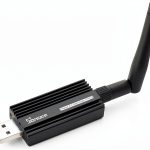
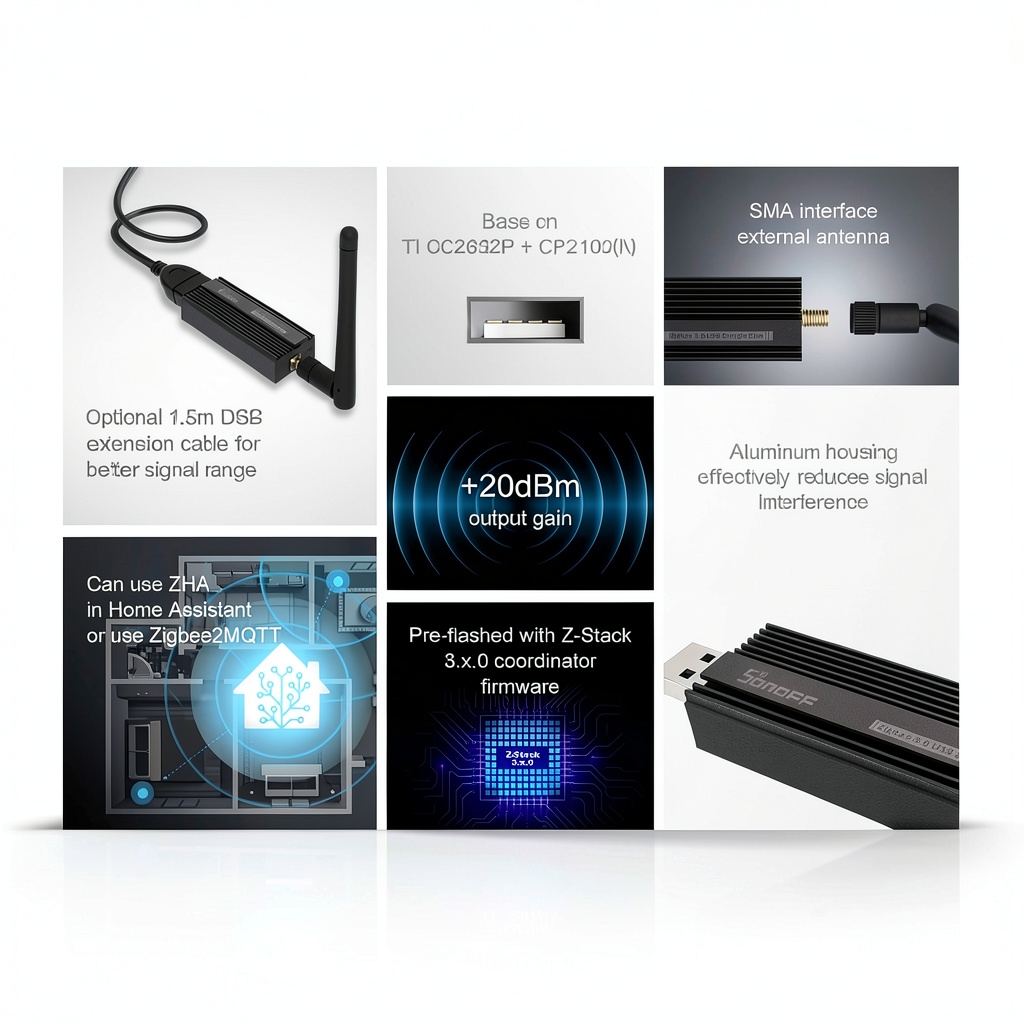
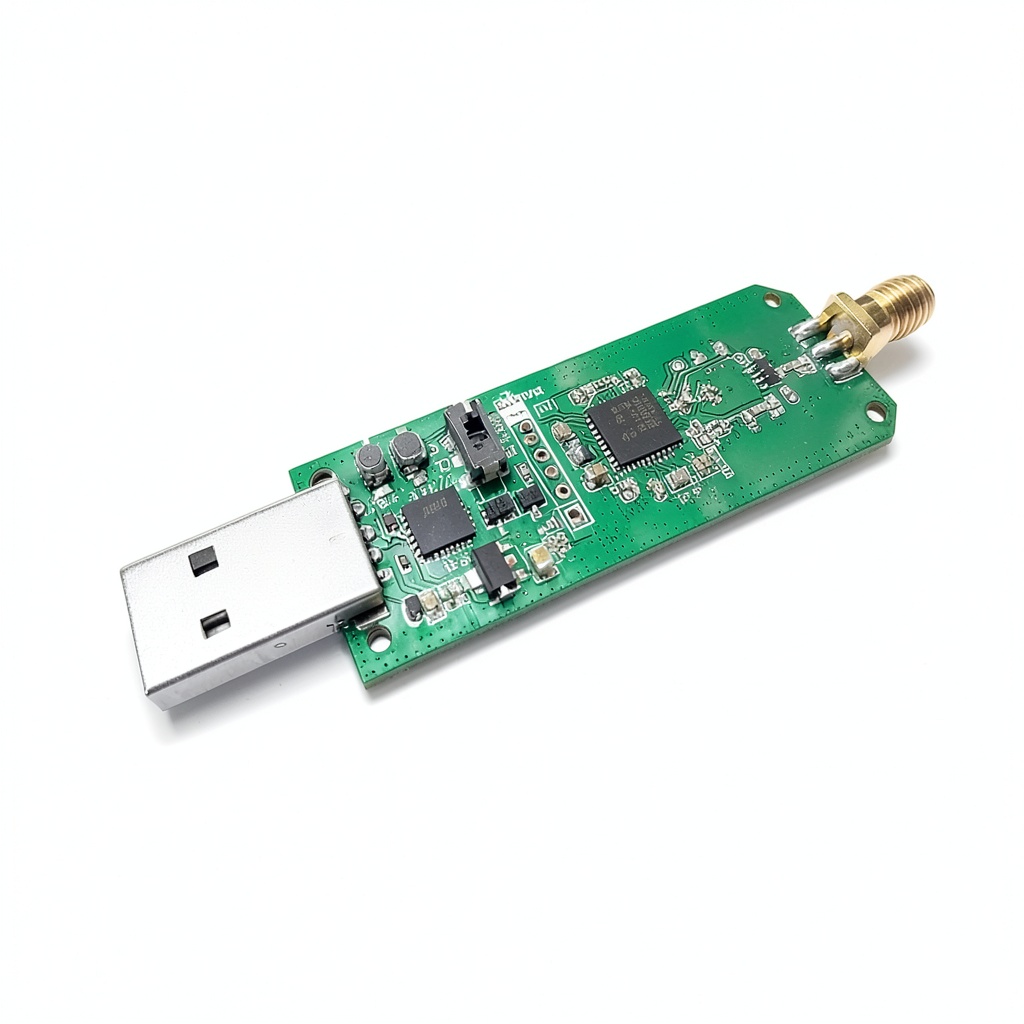
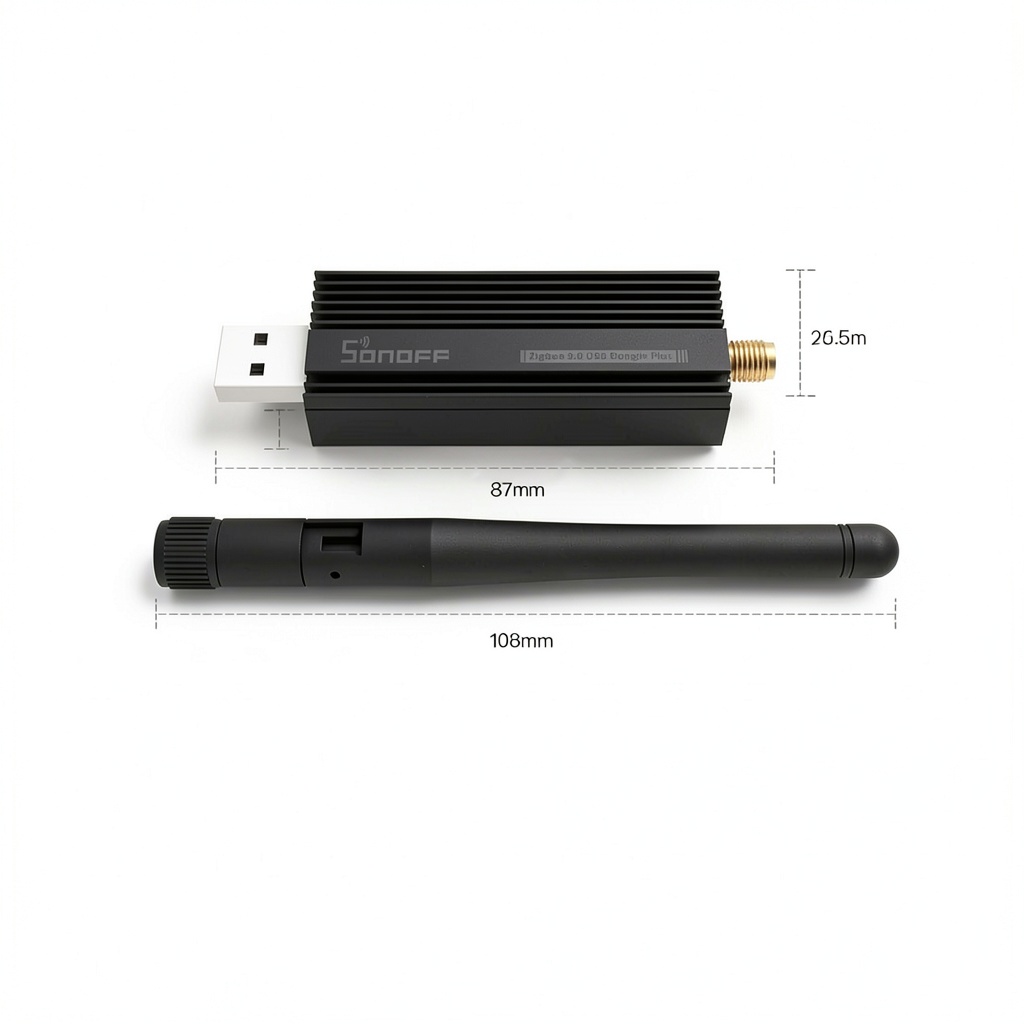
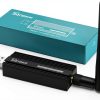
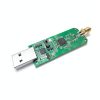
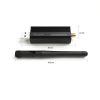
The SONOFF ZBdongle-P is a purpose‑built USB Zigbee adapter designed for users who need a reliable bridge between their computer hardware and Zigbee‑enabled smart devices. Housed in a sturdy aluminum enclosure, the dongle measures just 4.37 x 1.61 x 0.75 inches and weighs only 1.3 ounces, making it unobtrusive yet durable enough for continuous operation. Inside, the device combines a Texas Instruments CC2652P radio with a CP2102N USB‑to‑UART bridge, delivering a robust 20dBm transmit power that outperforms many competing adapters on the market.
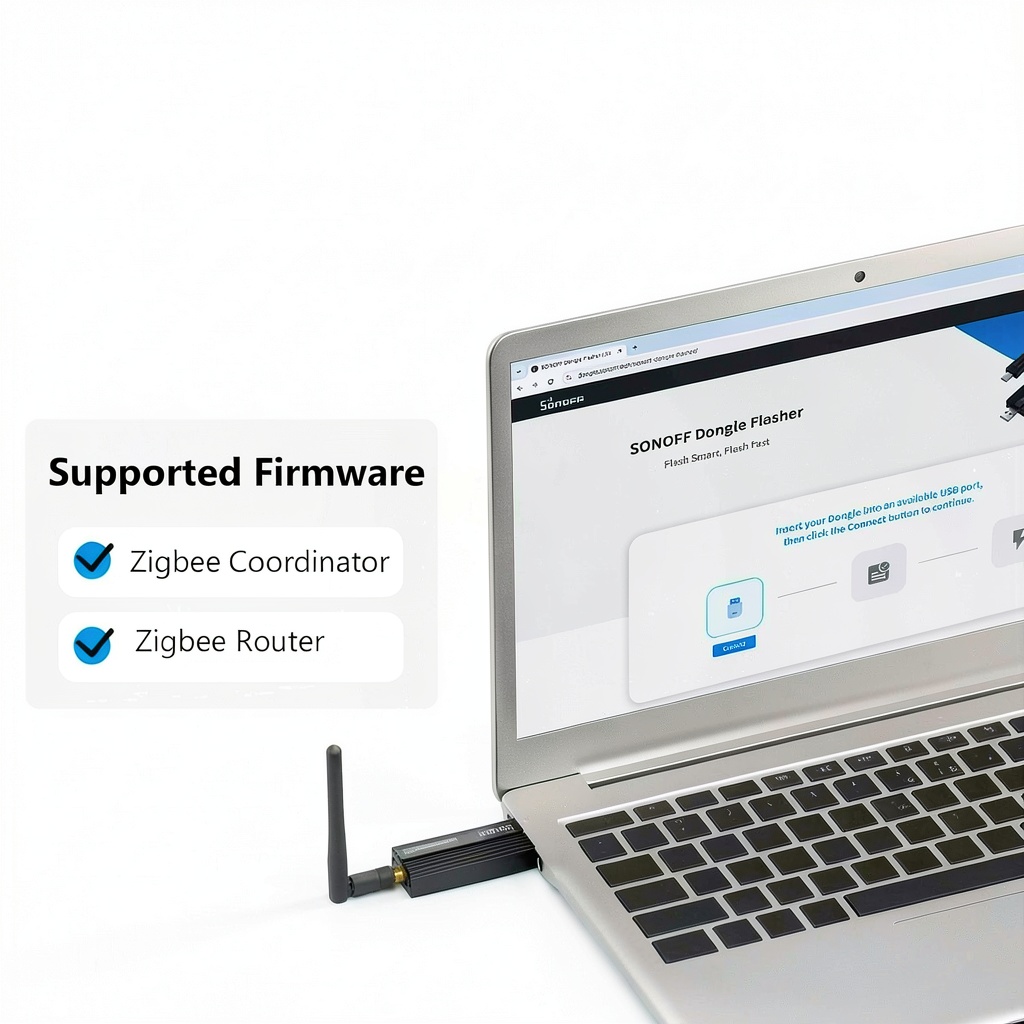
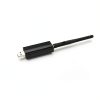
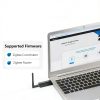
Pre‑flashed with Z‑Stack 3.x coordinator firmware, the ZBdongle-P is ready to function as a Zigbee coordinator out of the box. The firmware supports both Zigbee Home Automation (ZHA) and Zigbee2MQTT, giving users the flexibility to integrate the dongle into a variety of home‑automation platforms, including Home Assistant, OpenHAB, and commercial smart‑home hubs. The device’s SMA antenna port allows the attachment of an external antenna, further extending range and reducing signal loss caused by nearby metal objects or Wi‑Fi interference.
Compatibility is a core strength of the ZBdongle-P. It works seamlessly with Windows 10/11, macOS, Ubuntu, Raspbian, and other Linux distributions. The driver is based on the widely supported CDC‑ACM class, meaning most operating systems will recognize the dongle without additional software. For developers, the open‑source nature of the Z‑Stack firmware provides a platform for custom applications, while end‑users benefit from a plug‑and‑play experience.
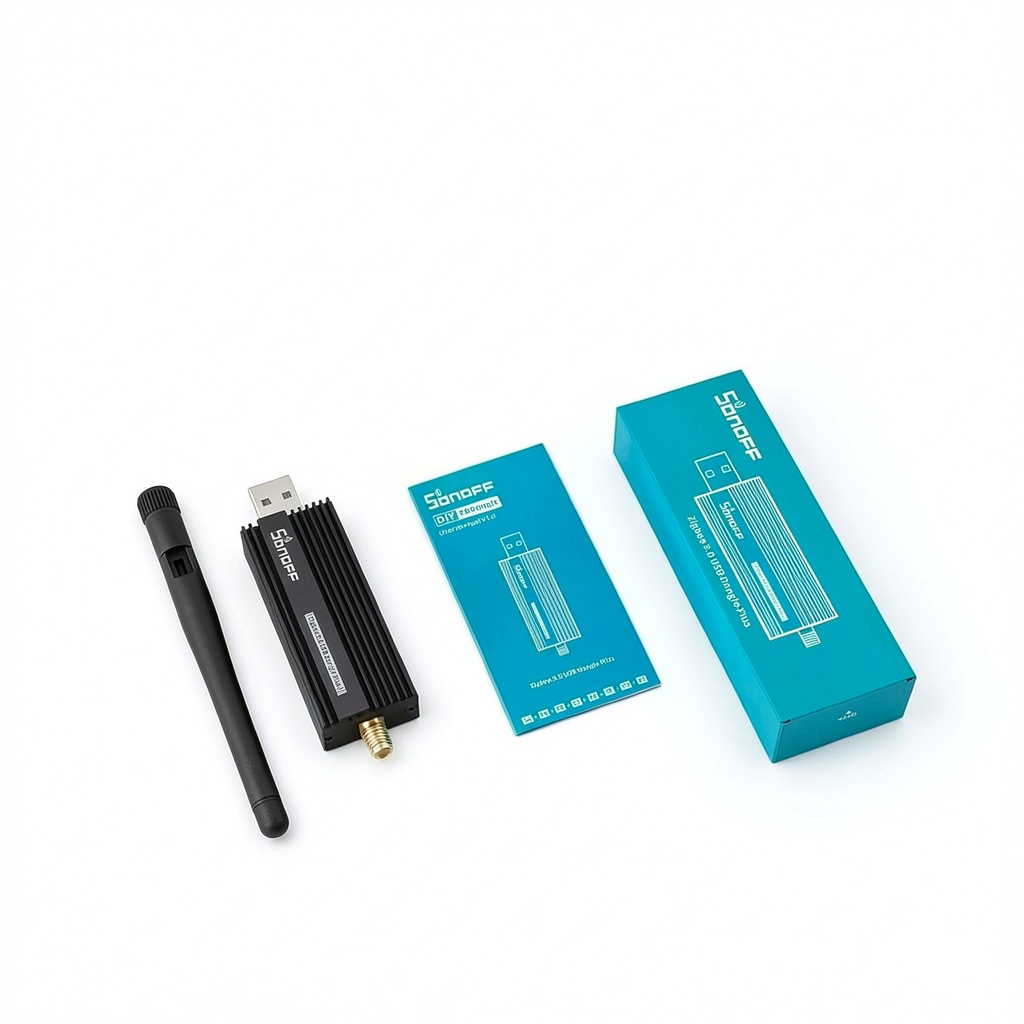
![[Product front view showing all components]](https://www.bonex.store/wp-content/uploads/2026/06/54bd5a28abde41a8b2f5359bd465de2b.jpg)
Usage
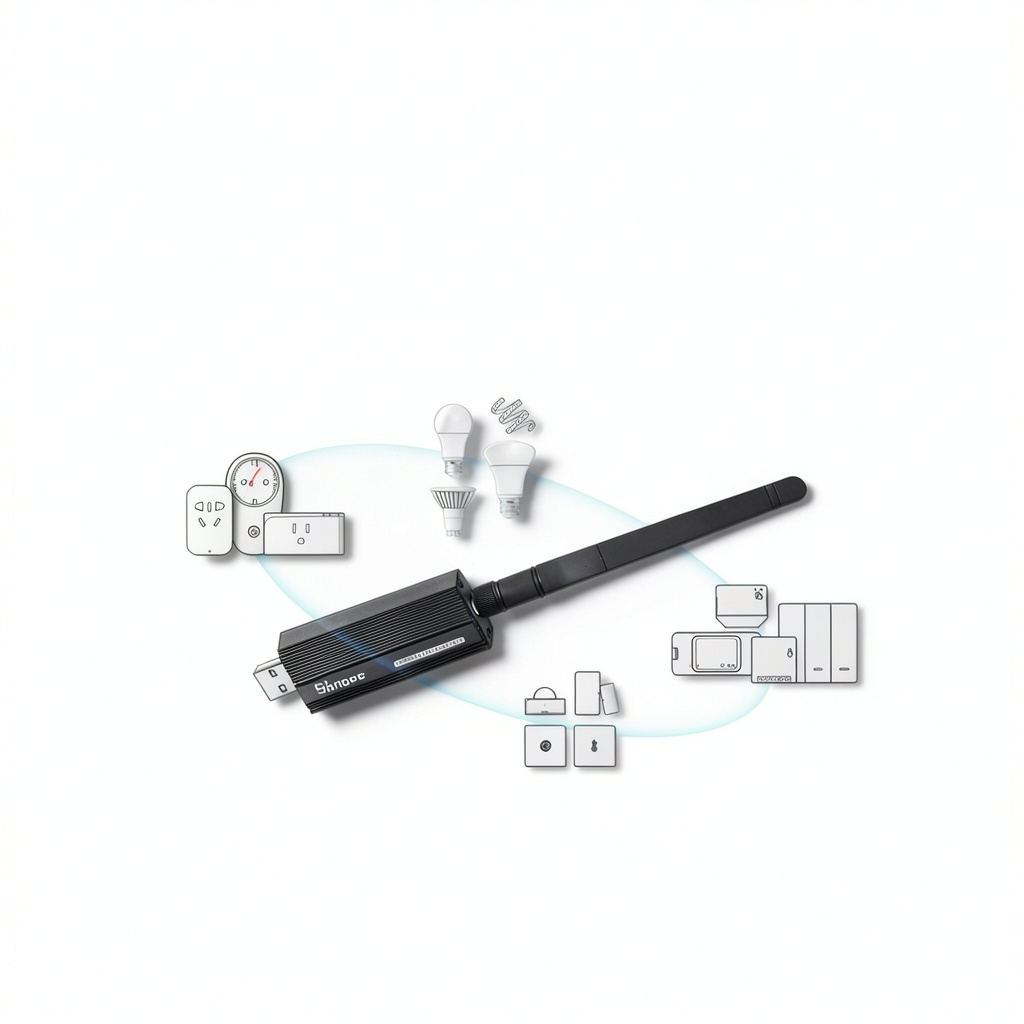
In a typical smart‑home setup, the ZBdongle-P connects to a desktop, laptop, or Raspberry Pi that runs a home‑automation server. Once attached, the server discovers nearby Zigbee devices—such as lights, sensors, locks, and thermostats—and adds them to the network. Because the dongle supports both ZHA and Zigbee2MQTT, users can choose the protocol that best matches their existing ecosystem, ensuring smooth interoperability with devices from different manufacturers.
The high‑gain antenna option is especially valuable in larger homes or environments with thick walls, where signal attenuation can be a challenge. By attaching a suitable external antenna, users can extend the effective range of the Zigbee network, reducing the need for additional repeaters or routers. This makes the ZBdongle-P an ideal solution for both hobbyist installations and professional deployments in office buildings, hotels, or multi‑unit residences.
Beyond residential use, the dongle can serve as a development platform for IoT prototypes. Engineers can program custom Zigbee clusters, test device firmware, or simulate network traffic directly from a PC. The compact form factor means the dongle can be embedded in test rigs or portable labs, providing a versatile tool for rapid prototyping and field testing.
Why Choose Us
SONOFF has a reputation for delivering reliable, cost‑effective smart‑home hardware, and the ZBdongle-P continues that tradition with a focus on performance and ease of integration. The aluminum housing not only protects the internal components from physical damage but also acts as a heat sink, ensuring stable operation even during prolonged data transmission. The device’s 20dBm output power translates to a longer communication radius, which is critical for maintaining a stable mesh network in dense environments.
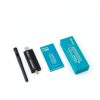
Customer support is a cornerstone of the SONOFF brand. Buyers receive access to detailed documentation, including a QR‑coded user manual that links to step‑by‑step installation videos. The support team monitors community forums and provides timely firmware updates, addressing security patches and adding new features based on user feedback. This commitment to after‑sales service helps users keep their Zigbee networks secure and up‑to‑date.
Finally, the ZBdongle-P is backed by a robust warranty and a large community of users who share configurations, troubleshooting tips, and custom scripts. Whether you are a beginner setting up your first smart‑home or an experienced developer building a commercial solution, the combination of hardware quality, software flexibility, and responsive support makes the ZBdongle-P a trustworthy choice.
Key Features
- High‑power 20dBm output ensures reliable communication across large homes and office spaces.
- SMA antenna port allows optional external antenna for extended range and reduced interference.
- Pre‑installed Z‑Stack 3.x firmware supports both ZHA and Zigbee2MQTT for flexible integration.
- Compact aluminum housing provides durability, heat dissipation, and a sleek professional look.
- Comprehensive after‑sales support, detailed manuals, and regular firmware updates for peace of mind.
FAQ
Can the ZBdongle-P be used with a Raspberry Pi?
Yes, the dongle is fully compatible with Raspberry Pi running Raspbian or any other Linux distribution. It appears as a standard USB serial device, and you can install the required Zigbee software (such as Zigbee2MQTT) directly on the Pi.
Do I need to install drivers on Windows?
On Windows 10 and later, the operating system includes the generic CDC‑ACM driver, so the dongle is recognized automatically. For older versions of Windows, SONOFF provides a simple driver package that can be downloaded from the product page.
What type of external antenna should I use?
The SMA connector accepts standard 50 Ω antennas. A common choice is a 5 dBi omnidirectional antenna, which balances range and coverage. For environments with specific directional needs, a higher‑gain directional antenna can be used.
Is the firmware upgradable?
Yes, the Z‑Stack firmware can be updated via the USB interface. SONOFF releases periodic updates that add new features, improve stability, and address security concerns. Detailed flashing instructions are included in the QR‑coded user manual.
Will the dongle work with commercial Zigbee hubs?
The ZBdongle-P functions as a Zigbee coordinator, so it can replace or supplement existing hubs that support a coordinator role. However, compatibility depends on the hub’s ability to accept an external coordinator; most open‑source platforms like Home Assistant do support this configuration.
Reviews
There are no reviews yet.